

Alapadatok
Expert in Film Studies
Angol
Program
The MA in Film Studies is designed for applicants with a strong interest in a specialised area of film studies, such as film history, film theory, genre studies, or film scholarship. It is particularly suited to those intending to pursue an academic career or seeking professional opportunities within the film industry.
We welcome applications from students who, in addition to attending compulsory classes, are willing and able to undertake a substantial amount of independent study. This includes viewing a wide range of films, engaging with scholarly literature in foreign languages, and completing creative assignments outside the classroom. Applicants should also be keen to participate actively in the academic and cultural life of the film community, for example by attending and organising film conferences and festivals, leading film clubs, and taking part in workshops and related professional activities.
What Makes This Programme Distinctive
The first Film Studies programme in Hungary was launched at the Faculty of Humanities of Eötvös Loránd University (ELTE) in 1994. Since then, its predecessor, the MA in Film Theory and Film History, has become one of the University’s most popular degree programmes.
Unlike its predecessor, the current MA in Film Studies does not aim to provide comprehensive coverage of every area within the discipline. Instead, the curriculum recognises that many students entering the programme will already have acquired a solid foundation in film studies during their undergraduate education. At the same time, the programme allows those who require it to address any gaps in their knowledge during the first year of study. The primary aim of the MA is to help students develop specialised academic interests and deepen their expertise in their chosen field.
To support this, the programme offers advanced seminars and individual academic supervision. Students pursuing the theoretical pathway can explore specialised topics in film theory, genre studies, and film history in greater depth, while those opting for the practice-oriented pathway may choose from a range of professionally focused modules, including filmmaking, film production, film distribution, and the international film industry.
Programme Details
Specializations:
Filmmaking
Film Theory
The Filmmaking specialization allows students to get hands-on experience in the various creative areas of production process (screenwriting, directing, editing, cinematography, production), and produce a collaborative thesis project. Graduates will also have a sound understanding of the artistic challenges of filmmaking and the particular issues associated with film production and distribution in both Hungarian and international contexts.
The Film Theory specialisation combines a broad range of theoretical and historical courses with an introduction to the fundamentals of filmmaking, enabling students to develop a comprehensive understanding of both the academic and practical dimensions of cinema. Teaching is delivered by nationally and internationally recognised scholars, researchers, and film professionals, ensuring the programme’s high academic and professional standards.
Upon completion of the programme, graduates will possess advanced knowledge of film history, film theory, and moving image production, enabling them to analyse and interpret film within its broader cultural and social contexts. They will have a thorough understanding of film history and cinematic genres, and will be able to apply critical thinking across a range of written formats, both in theoretical enquiry and in the analysis of film movements, historical periods, and genres.
In both specialization, students develop thesis projects (academic and creative) through consultation sessions with assigned advisers.
The programme provides an excellent foundation for further doctoral study.
The Institute for Art Theory and Media Studies at ELTE was one of the first higher institutions of education in Hungary to offer a degree in Film Studies. Part of the prestigious Institute for Art Theory and Media Studies, the Department of Film Studies has been hosting various undergraduate, graduate and postgraduate programs since the 1990s. The faculty members are highly acknowledged experts in film studies, specialists of their chosen fields and take part in international and local research projects.
They regularly organise conferences, workshops and screenings on a wide array of topical phenomena in past and contemporary film culture. Students play an important role in initiating and organising these events. The department has brought to life and operates a unique research group on Hungarian film history and has a major share in publications in this field. Faculty members act as editors of different film journals serve as members of jury for film festivals and film boards. Our filmmaking courses are taught by acknowledged professionals of the film industry. The department cooperates with different international film organisations and has Erasmus+ cooperation contracts with about a dozen of institutions all over Europe.
Felépítés
Karrier
Besides academia, the program prepares students for jobs in various branches of the cultural/entertainment sector. Our graduates pursue an academic career or find different opportunities in the media and film industry. Students of the Film Theory specialization acquire the skills and knowledge which allow them to become academic researchers or apply for a PhD program, either to the Film, Media, and Contemporary Culture PhD program hosted by our institute or to programs in other institutions. Our graduates are equally well-qualified to work as film and communication teachers, film critics, experts, and many of them hold a post in film and media archives or different national institutions and boards. Students of the filmmaking specialization have the skills to realize different products in the moving image industry, such as music videos, commercials, video blogs, short feature films etc. They can work for film production companies and they are able to act as distribution and exhibition executives.
Film- and communication teachers, film-critics, editors, experts, positions at film and media archives or different national institutions and boards, line producers, screenwriters, cameramans.
Felvételi
Entry requirements
Applicants must hold a university bachelor’s degree (or an equivalent college degree) in the fields listed below. Full credit acknowledgement is only given for a BA degree in Liberal Arts, Motion Pictures Studies and Visual Representation Studies with Motion Pictures Culture and Media Expert Specialization.
In the case of a BA degree from any other study fields, each degree will be considered individually, and transcripts from your diploma as well as course descriptions will be requested. The applicant must have 50 credits (at least 30 to enter the programme) from the fields of film history, film theory, motion-picture creating, film studies, philosophy, literature theory, history of social sciences, history and theory of art and theory culture.
The educational and outcome requirements are defined by the Ministry of Human Capacities, Regulation No. 18/2016. (VIII. 5.). Details of the application and admission process are defined by the Organisational and Operational Regulations of ELTE.
Applicants to the (1) Film Theory specialization have to submit a brief research proposal, which outlines the research project they intend to realize throughout the program; (2) Filmmaking specialization have to send with the rest of their application materials a link to their online portfolio, which includes samples of their previous creative projects (still or moving images, other digital media products, screenwriting sample etc).
Language requirements
The language of instruction for the entire program is English.
Non-native speakers of English must demonstrate a very good level of English-language skills: minimum B2 level CEFR
Following minimum results are preferred:
TOEFL IBT (Internet-based test): 72-94
IELTS (International English Language Testing System): 6.0
Duolingo: 100
Document | Comment |
|---|---|
- | |
Secondary school certificate (graduation certificate) | Notarized copy only on request. |
Bachelor-level degree | An official copy of your completed Bachelor degree |
Transcript of records |
|
CV | In English, in MS Word format with one low resolution photo |
Motivation letter | A maximum of 500 words. |
Research work plan (FOR FILM THEORY SPECIALIZATION) | Applicants for the Film Theory specialization have to submit a brief research proposal, |
Copy of the main pages of the passport | Scanned, in colour all personal details and expiry date must be shown. Passport must be valid. |
Copy of application fee payment receipt |
|
Copy of the Entrance exam fee payment receipt |
|
Reference work (FOR FILMMAKING SPECIALIZATION) | Applicants for the Filmmaking specialization have to send with the rest of their application materials a link to their online portfolio, which includes samples of their previous creative projects (still or moving images, other digital media products, screenwriting sample etc). |
Language certificate | Official test result or certificate must be provided; |
Other: An official English translation of the certificates and the records if the language of the original is not English |
Optional documents for admissions
Letter of Reference: Also called “Letter of recommendation”: From a former instructor and/or employer
Application deadlines
The deadline for application means the deadline of submission of the full and complete application package in the online system.
Period 1 (with Early Bird discount): 01/10-30/11/2026 23:59 (CET)
Period 2 (with Early Bird discount): 01/02-31/03/2027 23:59 (CET)
Period 3: 01/04-31/05/2027 23:59 (CET)
The application procedure includes 3 periods in order to give the applicants the freedom to submit their application when it’s most suitable for them. The applicants of each period have the same chance to get admittance for the programme. However, please note, that the Faculty of Humanities ELTE reserves the right to cancel the entrance periods in case the number of the admitted applicants reaches the limit during the previous entrance periods.
Procedure of the application
The application starts in the online application system. Students need to register in the system, fill in the online application form, upload the required documents and follow the instructions during the application process.
Applications will only be processed if the application fee (non-refundable) has been paid on the University’s online payment platform.
Before making the payment please visit the Faculty’s website (go to section Application and Entrance Exam fees) for detailed guidance on how to use the payment platform.
Payment platform: https://epay.elte.hu/
Entrance examination and selection process
When the university receives the full application package and it is checked by the Department of International Affairs an entrance exam date option will be sent no later than the application deadline for the relevant period. Please, check your messages in the application system, and the e-mail address that is linked to the account regularly. The applications are examined by the Admission Board no later than after each application period and applicants are notified of the outcome of the selection in the online application system after the decision is official. Admission letters are sent out in the online application system within a few days.
Procedure of the entrance examination
The entrance exam contains a discussion about the motivation of the applicant. Successful applicants must have a good command of English to pass the entrance exam. The format of the entrance exam is an online interview. Ranking is based on the overall evaluation of academic excellence (based on the submitted documents) and the results of the entrance exam.
Results and the official decision will be announced in the application system. Admission letters are sent out also in the online application system within a few days.
Written stage
Film Theory specialisation
A scholarly written paper on a film-related topic. This may be a Bachelor’s dissertation, a seminar paper, or another piece of academic writing on a film-related subject, complete with bibliography and footnotes, with a minimum length of 10,000 characters (including spaces). Applicants are strongly encouraged to submit their Bachelor’s dissertation if it was written on a film-related topic.
Filmmaking specialisation
Applicants wishing to be considered for the Filmmaking specialisation are also required to submit a practical portfolio comprising the following two elements:
1. A continuous three-minute excerpt from a short film previously made by the applicant (i.e. not a trailer or showreel), in which the applicant participated as either the director or the screenwriter.
2. The first five pages of the screenplay for a proposed moving image project, together with a synopsis of the complete film.
Please upload the video excerpt to a video-sharing platform and submit the link together with the other application materials. Applicants are advised to ensure that the sharing settings allow the admissions committee to access the video.
Oral Interview
The oral stage of the admissions process consists of the following elements:
• Discussion of the written submission and, where applicable, the audiovisual materials submitted by the applicant.
• Questions relating to the applicant’s proposed MA dissertation topic and research plan; assessment of the applicant’s academic background relevant to the proposed research; discussion of the applicant’s approach to research and creative practice; and evaluation of the applicant’s English-language proficiency, including both conversational and subject-specific communication skills.
• Assessment of the applicant’s knowledge of cinema, familiarity with film history, and understanding of film aesthetics.
• Questions concerning the applicant’s previous academic and professional experience, including film productions, industry-related work, research projects, and academic competitions.
• For applicants who have submitted a filmmaking portfolio, discussion of the submitted audiovisual material (film excerpt) and written materials (the first five pages of the screenplay and the synopsis), with particular emphasis on their concept and the circumstances of their development and production.
For more information about the application procedures, please visit the Faculty’s website
Elérhetőségek
Admission
Department of International Affairs
E-mail: admission@btk.elte.hu
Address: 1088 Budapest, Múzeum krt. 4., Room 32
More information
Website
András Bálint KOVÁCS
Head of Department of Film Studies




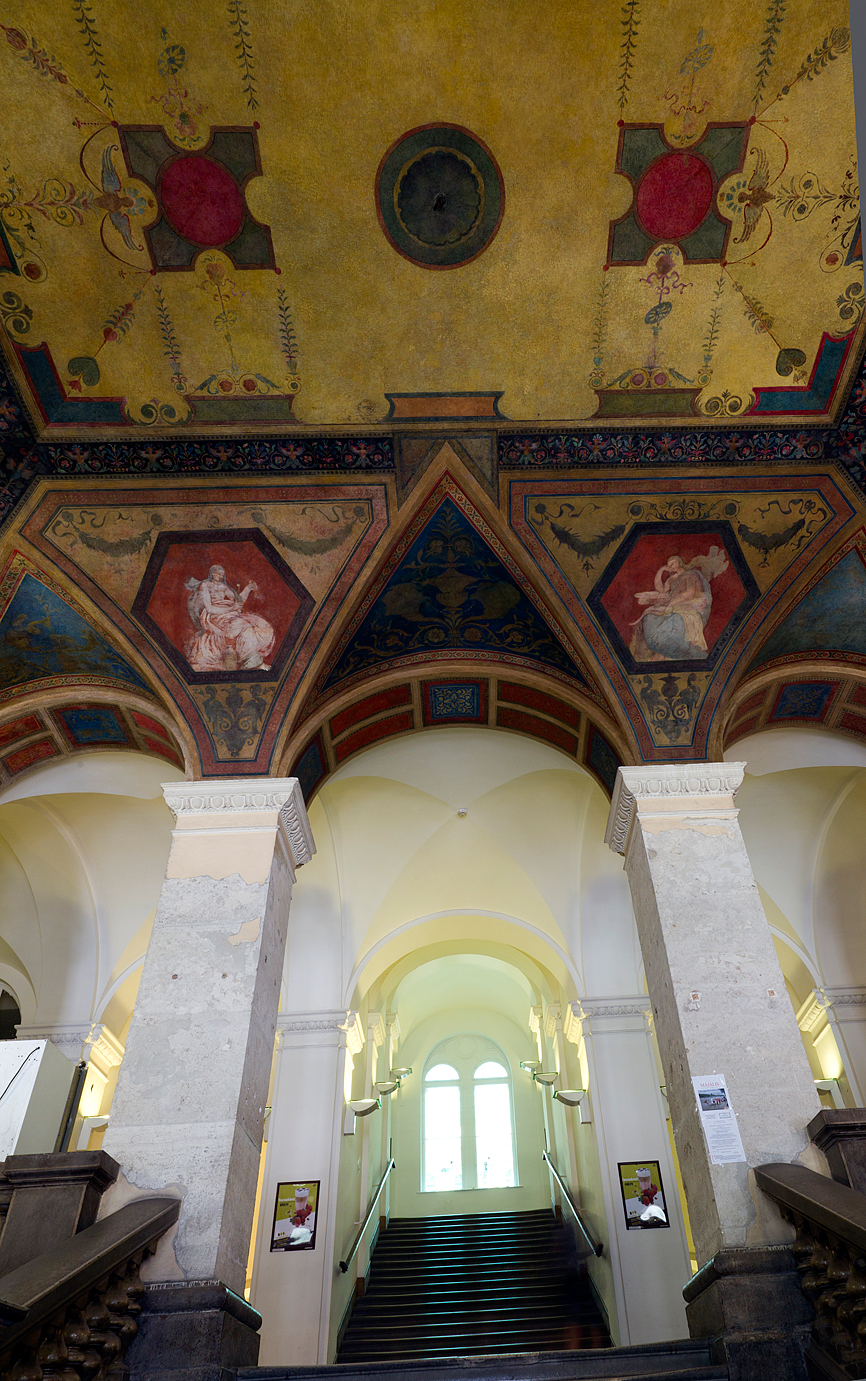


In the department, students are admitted either to a Filmmaking Specialization or to a Film Theory Specialization. In both students are assigned a departmental tutor, who oversees the creative or academic project they produce throughout the four semesters.
On top of fulfilling the 120-credit requirement for graduation during the 4 semesters, students:
In the Filmmaking Specialization write a brief academic paper (2nd semester) before they start to work on their creative project in cooperation with the tutor
In the Film Theory Specialization take Research Methodology (2nd semester) and Academic Writing (3rd semester) classes and work on their academic project in cooperation with their tutor
More information about the structure of the program can be found at:
www.btk.elte.hu/en/master-programmes