

Videos
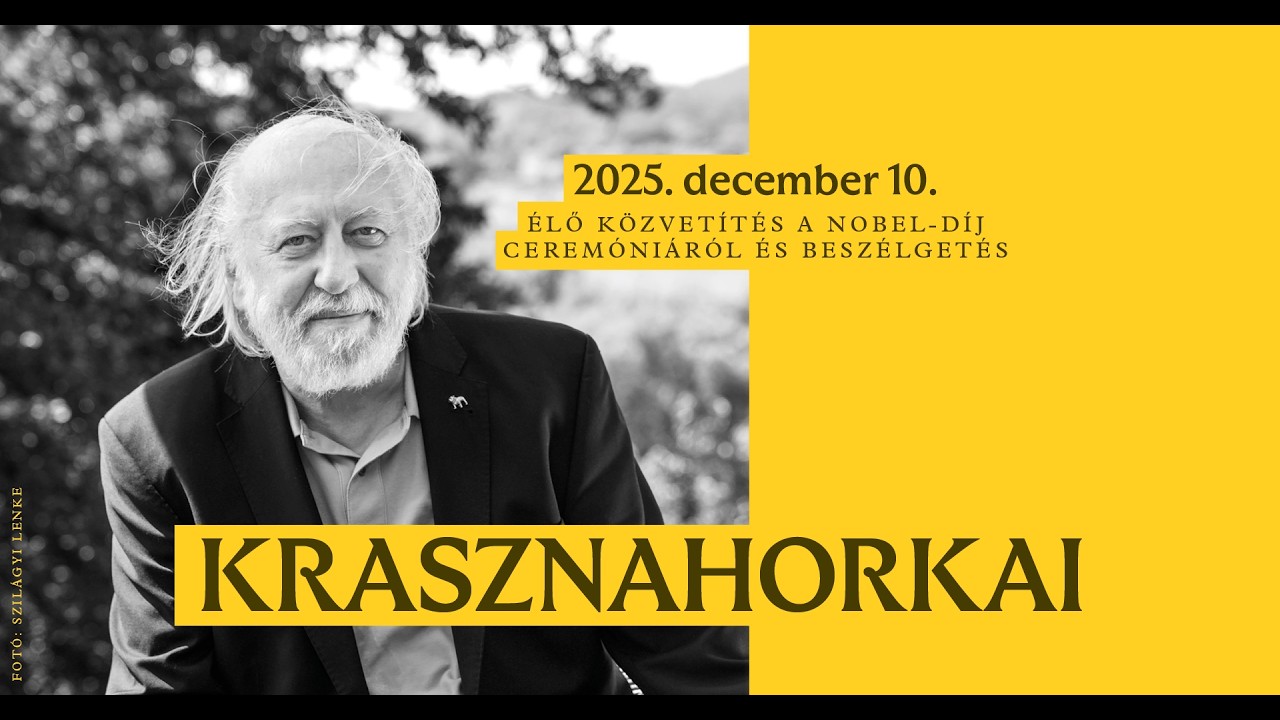
A Krasznahorkai-év az ELTE-n 2025. december 10-én egy nagyszabású ünnepi rendezvénnyel vette kezdetét a Bölcsészettudományi Karon. A díjátadó ceremónia élő közvetítését követően a Krasznahorkai-életművet közelről ismerő, azt kutató ELTE-s oktatók beszélgettek az író „A magyar nemzet biztonsága” című, frissen megjelent regényéről.
A beszélgetés résztvevője volt Radnóti Sándor akadémikus, esztéta, filozófus és kritikus, aki az elsők között ismerte fel a „Sátántangó” jelentőségét; Zsadányi Edit, az első Krasznahorkai-monográfia szerzője, Schein Gábor irodalomtörténész, a kortárs irodalom és kultúra szakavatott ismerője és Szilák Flóra végzős doktorandusz, aki disszertációját Krasznahorkai László prózájáról írja. A kerekasztalt a Krasznahorkai-év szakmai vezetője, az ELTE Magyar Irodalom- és Kultúratudományi Intézet igazgatója, Gintli Tibor professzor moderálta.
A beszélgetés résztvevője volt Radnóti Sándor akadémikus, esztéta, filozófus és kritikus, aki az elsők között ismerte fel a „Sátántangó” jelentőségét; Zsadányi Edit, az első Krasznahorkai-monográfia szerzője, Schein Gábor irodalomtörténész, a kortárs irodalom és kultúra szakavatott ismerője és Szilák Flóra végzős doktorandusz, aki disszertációját Krasznahorkai László prózájáról írja. A kerekasztalt a Krasznahorkai-év szakmai vezetője, az ELTE Magyar Irodalom- és Kultúratudományi Intézet igazgatója, Gintli Tibor professzor moderálta.
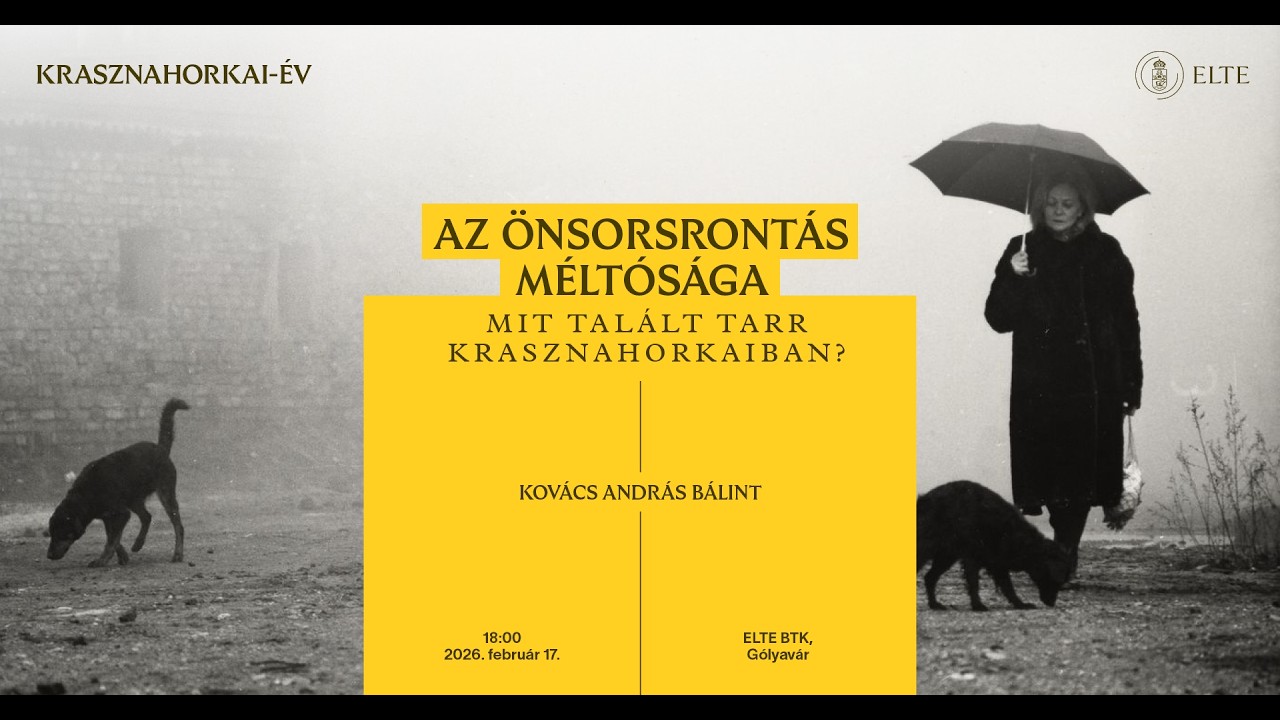
Kovács András Bálint filmtörténész a Krasznahorkai-év keretében tartott előadásában azt vizsgálta, milyen hatással volt Tarr Béla filmművészetére találkozása Krasznahorkaival.
Auguste Audollent francia kutató éveket töltött Észak-Afrikában, és amikor visszatért Clermont-Ferrandba, ahol egyetemi tanárrá nevezték ki, magával hozta a több tucat ólomtáblából álló gyűjteményét. A táblácskákon olvasható átokszövegek nagy részét azonban nem adta ki. A Gólyavári Esték keretében Németh György Amadé ókortörténész, klasszika-filológus, az ELTE BTK Ókortörténeti Tanszékének egyetemi tanára ezeket a szövegeket és értelmezésüket mutatta be.

The Department of English Language Pedagogy of Eötvös Loránd University and the International Association for Intercultural Education (IAIE) held its international scientific conference ‘Currents in Education: Navigating Change in Languages, Cultures, and Communities’ on the Faculty of Humanities campus between 11 and 13 June 2025.
In addition to presenting the results of research in teaching and teacher education concerning intercultural, inclusive, and democratic current issues, the aim of the conference was to exchange experiences, strengthen our professional community and learn from each other. The main themes of the conference included intercultural communication, diversity, multilingualism, global competence and media literacy development, inclusive education and innovative pedagogies.
The local organizing team of the conference included Ildikó Lázár, Rita Divéki, Anna Zólyomi, Gabriella Jenei, Cecilia Gall, and Anna Pereszlényi.
The conference was supported by the Eötvös Publishing House, the University Excellence Fund and the NRDIH Scientific Patronage Program.
In addition to presenting the results of research in teaching and teacher education concerning intercultural, inclusive, and democratic current issues, the aim of the conference was to exchange experiences, strengthen our professional community and learn from each other. The main themes of the conference included intercultural communication, diversity, multilingualism, global competence and media literacy development, inclusive education and innovative pedagogies.
The local organizing team of the conference included Ildikó Lázár, Rita Divéki, Anna Zólyomi, Gabriella Jenei, Cecilia Gall, and Anna Pereszlényi.
The conference was supported by the Eötvös Publishing House, the University Excellence Fund and the NRDIH Scientific Patronage Program.

The international conference, organized in cooperation with the HUN-REN – ELTE Interdisciplinary Archaeology Research Group and the Department of Ancient Archaeology, explored issues of Romanization, acculturation, and Roman civilization based on archaeological finds from the provinces of the Roman Empire. More than 50 researchers from numerous European countries, from England and Spain to Germany and Italy to Bulgaria and Ukraine, gave presentations at the conference. The presentations covered a wide range of topics, including settlement history and architecture, burials, costume history, glassmaking, ceramic vessels, sculpture, shipbuilding, and the interaction between Roman culture and barbarian peoples within the Empire and beyond its borders, from the Republican era to the early Migration Period. At the conference, the MédiaMűhely team interviewed ELTE Rector László Borhy and Simone Pastor, archaeologist at the Sovrintendenza Capitolina ai Beni Culturali.

The Chinese Music and Cultural Centre was inaugurated at ELTE Faculty of Humanities, and at the ceremony, Rector László Borhy and Wang Rui, President of the Zhejiang Conservatory of Music, signed an agreement on a joint music master's programme between the two institutions. The newly opened centre is a sister institution of the Kodály Centre, inaugurated in Hangzhou in November 2023.


Eötvös Loránd University Faculty of Humanities is Hungary’s longest standing and most prestigious faculty. In 2019, our Faculty – together with ELTE University – celebrated the 385th anniversary of its founding, which aptly indicates our leading position in scholarship and the stability it represents, not only in Hungary’s scientific and social history, but also in East-Central Europe’s variegated educational landscape.
Our Faculty is not only the oldest and – for over seven consecutive years – the absolute best in the country, but also the largest institution in Hungary, with 18 institutes and 71 departments offering 47 Bachelor’s, 61 Master’s and 75 PhD programs of 4 doctoral schools.
Our Faculty is not only the oldest and – for over seven consecutive years – the absolute best in the country, but also the largest institution in Hungary, with 18 institutes and 71 departments offering 47 Bachelor’s, 61 Master’s and 75 PhD programs of 4 doctoral schools.

Currently, about 2,500 international students study at ELTE and the community of international students is growing from year to year. Check out what our international students think and join ELTE.

The English Foundation Course provides a gateway for students to European education, where a good command of knowledge is required. The program equips students with the basic linguistic, cultural and study skills necessary for beginning bachelor level studies at a European university.

Dr Dávid Bartus Dean's welcome for the students of the Faculty of Humanities. Turn on the English captions.

Let us greet you with this little video message from our Dean, Prof Dr Gábor Sonkoly, in spite of the cancelled Graduation Ceremony.
A Krasznahorkai-év az ELTE-n 2025. december 10-én egy nagyszabású ünnepi rendezvénnyel vette kezdetét a Bölcsészettudományi Karon. A díjátadó ceremónia élő közvetítését követően a Krasznahorkai-életművet közelről ismerő, azt kutató ELTE-s oktatók beszélgettek az író „A magyar nemzet biztonsága” című, frissen megjelent regényéről.
A beszélgetés résztvevője volt Radnóti Sándor akadémikus, esztéta, filozófus és kritikus, aki az elsők között ismerte fel a „Sátántangó” jelentőségét; Zsadányi Edit, az első Krasznahorkai-monográfia szerzője, Schein Gábor irodalomtörténész, a kortárs irodalom és kultúra szakavatott ismerője és Szilák Flóra végzős doktorandusz, aki disszertációját Krasznahorkai László prózájáról írja. A kerekasztalt a Krasznahorkai-év szakmai vezetője, az ELTE Magyar Irodalom- és Kultúratudományi Intézet igazgatója, Gintli Tibor professzor moderálta.
A beszélgetés résztvevője volt Radnóti Sándor akadémikus, esztéta, filozófus és kritikus, aki az elsők között ismerte fel a „Sátántangó” jelentőségét; Zsadányi Edit, az első Krasznahorkai-monográfia szerzője, Schein Gábor irodalomtörténész, a kortárs irodalom és kultúra szakavatott ismerője és Szilák Flóra végzős doktorandusz, aki disszertációját Krasznahorkai László prózájáról írja. A kerekasztalt a Krasznahorkai-év szakmai vezetője, az ELTE Magyar Irodalom- és Kultúratudományi Intézet igazgatója, Gintli Tibor professzor moderálta.
Kovács András Bálint filmtörténész a Krasznahorkai-év keretében tartott előadásában azt vizsgálta, milyen hatással volt Tarr Béla filmművészetére találkozása Krasznahorkaival.
Auguste Audollent francia kutató éveket töltött Észak-Afrikában, és amikor visszatért Clermont-Ferrandba, ahol egyetemi tanárrá nevezték ki, magával hozta a több tucat ólomtáblából álló gyűjteményét. A táblácskákon olvasható átokszövegek nagy részét azonban nem adta ki. A Gólyavári Esték keretében Németh György Amadé ókortörténész, klasszika-filológus, az ELTE BTK Ókortörténeti Tanszékének egyetemi tanára ezeket a szövegeket és értelmezésüket mutatta be.
The Department of English Language Pedagogy of Eötvös Loránd University and the International Association for Intercultural Education (IAIE) held its international scientific conference ‘Currents in Education: Navigating Change in Languages, Cultures, and Communities’ on the Faculty of Humanities campus between 11 and 13 June 2025.
In addition to presenting the results of research in teaching and teacher education concerning intercultural, inclusive, and democratic current issues, the aim of the conference was to exchange experiences, strengthen our professional community and learn from each other. The main themes of the conference included intercultural communication, diversity, multilingualism, global competence and media literacy development, inclusive education and innovative pedagogies.
The local organizing team of the conference included Ildikó Lázár, Rita Divéki, Anna Zólyomi, Gabriella Jenei, Cecilia Gall, and Anna Pereszlényi.
The conference was supported by the Eötvös Publishing House, the University Excellence Fund and the NRDIH Scientific Patronage Program.
In addition to presenting the results of research in teaching and teacher education concerning intercultural, inclusive, and democratic current issues, the aim of the conference was to exchange experiences, strengthen our professional community and learn from each other. The main themes of the conference included intercultural communication, diversity, multilingualism, global competence and media literacy development, inclusive education and innovative pedagogies.
The local organizing team of the conference included Ildikó Lázár, Rita Divéki, Anna Zólyomi, Gabriella Jenei, Cecilia Gall, and Anna Pereszlényi.
The conference was supported by the Eötvös Publishing House, the University Excellence Fund and the NRDIH Scientific Patronage Program.
The international conference, organized in cooperation with the HUN-REN – ELTE Interdisciplinary Archaeology Research Group and the Department of Ancient Archaeology, explored issues of Romanization, acculturation, and Roman civilization based on archaeological finds from the provinces of the Roman Empire. More than 50 researchers from numerous European countries, from England and Spain to Germany and Italy to Bulgaria and Ukraine, gave presentations at the conference. The presentations covered a wide range of topics, including settlement history and architecture, burials, costume history, glassmaking, ceramic vessels, sculpture, shipbuilding, and the interaction between Roman culture and barbarian peoples within the Empire and beyond its borders, from the Republican era to the early Migration Period. At the conference, the MédiaMűhely team interviewed ELTE Rector László Borhy and Simone Pastor, archaeologist at the Sovrintendenza Capitolina ai Beni Culturali.
The Chinese Music and Cultural Centre was inaugurated at ELTE Faculty of Humanities, and at the ceremony, Rector László Borhy and Wang Rui, President of the Zhejiang Conservatory of Music, signed an agreement on a joint music master's programme between the two institutions. The newly opened centre is a sister institution of the Kodály Centre, inaugurated in Hangzhou in November 2023.
Eötvös Loránd University Faculty of Humanities is Hungary’s longest standing and most prestigious faculty. In 2019, our Faculty – together with ELTE University – celebrated the 385th anniversary of its founding, which aptly indicates our leading position in scholarship and the stability it represents, not only in Hungary’s scientific and social history, but also in East-Central Europe’s variegated educational landscape.
Our Faculty is not only the oldest and – for over seven consecutive years – the absolute best in the country, but also the largest institution in Hungary, with 18 institutes and 71 departments offering 47 Bachelor’s, 61 Master’s and 75 PhD programs of 4 doctoral schools.
Our Faculty is not only the oldest and – for over seven consecutive years – the absolute best in the country, but also the largest institution in Hungary, with 18 institutes and 71 departments offering 47 Bachelor’s, 61 Master’s and 75 PhD programs of 4 doctoral schools.
Currently, about 2,500 international students study at ELTE and the community of international students is growing from year to year. Check out what our international students think and join ELTE.
The English Foundation Course provides a gateway for students to European education, where a good command of knowledge is required. The program equips students with the basic linguistic, cultural and study skills necessary for beginning bachelor level studies at a European university.
Dr Dávid Bartus Dean's welcome for the students of the Faculty of Humanities. Turn on the English captions.
Let us greet you with this little video message from our Dean, Prof Dr Gábor Sonkoly, in spite of the cancelled Graduation Ceremony.